


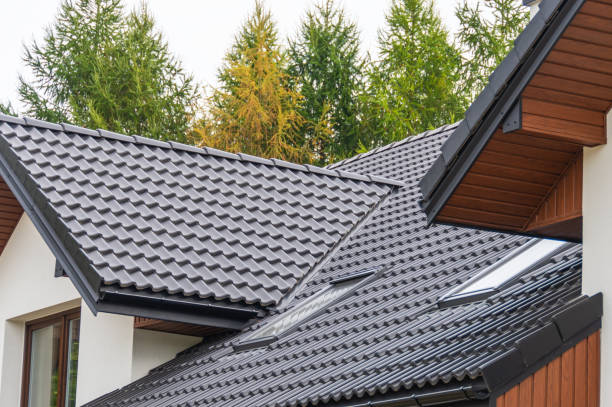
A metal tile roof is built for Texas weather—scorching summers, severe hail, and high winds. Its biggest advantage is long service life and impact resistance; its main drawback is higher upfront cost and the need for experienced installers. Below, we break down the real pros and cons so Texas homeowners can choose confidently.
Considering a project budget? Get a fast estimate with our roof replacement estimator.

The Pros of Metal Tile Roofs in Texas
They Last a Very Long Time
When properly installed, metal roofs last 40–70 years, compared to 15–25 years for asphalt under Texas heat and UV exposure. For long-term owners in Pflugerville, Sugar Land, Georgetown, or McKinney, that longevity often means one roof for decades instead of multiple replacements.
Lower Energy Bills
Reflective finishes help push solar heat away, reducing attic temps and AC load. In Fort Worth, Plano, and San Antonio, homeowners often report noticeable cooling savings in peak summer. Light or cool-roof colors (e.g., white, light gray, sand) can increase savings even further.
Notice a spike in cooling bills or hot-spot leaks? Our guide to roof leak repair in Austin explains how material choice affects long-term efficiency.
They Handle Hail Better
Texas hail from Waco–Temple–DFW is no joke. Many metal systems carry Class 4 impact ratings, tested to withstand ~2-inch hail without failing. Even when cosmetic dents occur, metal typically keeps water out better than cracked shingles.
Less Work to Keep Them Up
Metal doesn’t rot, warp, or curl, and it’s naturally resistant to mold, mildew, and pests. Annual DIY checks to tighten exposed fasteners, inspect flashings, and clear debris usually suffice.
Better Home Value
Buyers value longevity, energy savings, and low upkeep, so metal can lift curb appeal and resale potential in growing markets like Cedar Park and McKinney.
Fire Protection
Metal is non-combustible, an advantage for rural Hill Country and East Texas homes where wildfires can occur.
Insurance Breaks
Carriers often discount premiums for impact-resistant systems. In coastal zones (Galveston, Corpus Christi, Port Aransas), these savings help offset long-term costs of ownership.
The Cons of Metal Tile Roofs in Texas
Higher Cost to Start
Expect $12–$20 per sq. ft. installed vs. $5–$8 for asphalt. On a 2,000-sq-ft roof, metal may run $24k–$40k vs. $10k–$16k for shingles. If you’ll move within a few years, the ROI window may be too short.
Dents from Extreme Hail
Baseball-size hail can dent metal. Function typically remains intact, but appearance suffers—and some policies include cosmetic damage waivers. (Function-affecting damage is a different claim.)
Screw and Fastener Issues
On screw-down systems, overtightened/undertightened screws or aged washers can become leak points. Standing seam hides fasteners and reduces this risk—one reason it’s common in emergency roof repair scenarios where durability is key. Learn more in our emergency roof repair in Austin overview.
Noise Concerns
Uninsulated barn metal is loud—but modern residential installs over solid decking, underlayment, and insulation keep rain noise comparable to shingles. Stone-coated tiles are often quieter due to their textured surface.
Paint/Finish Wear
Paint can chip or abrade faster in West Texas (e.g., Lubbock, Midland) thanks to dust and wind-borne debris. It’s largely cosmetic, but some owners care.
Requires Specialized Roofers
Metal tile systems need certified, experienced installers. Smaller towns may have fewer specialists, which can affect timing and price. Poor installation is the root of most metal roof complaints—choose carefully.
When choosing a certified installer, it’s also smart to understand which metal tile styles perform best for your home’s design and local climate. See our detailed guide on The Best Types of Metal Roof Tiles in Texas for a breakdown of the most durable and energy-efficient options.
Matching Later Can Be Hard
Future additions may be hard to color-match due to paint fade or discontinued styles.
Expansion & Contraction
Texas temperature swings demand systems designed for thermal movement. Without the right fasteners/clips, panels can oil-can or loosen over time.
Walking & Service Access
Metal tiles are tougher than clay/cement—but still require careful foot traffic and correct walkway paths for satellite, HVAC, or chimney service.
What to Know Before Installing a Metal Roof in Texas
Your Local Weather Zone
-
Coast: corrosion, wind, and hurricane prep
-
Central/North: frequent hail and spring storms
-
West: extreme heat, dust, high UV
Choose alloy, coating, and profile to match your zone’s risks.
How Long You’ll Stay
Plan to move within 5–10 years? Asphalt might pencil out. Staying 15–20+? Metal’s lower life-cycle cost often wins.
HOA Requirements
Communities like The Woodlands, Southlake, or Alamo Heights may specify styles. Stone-coated steel often passes HOA reviews thanks to its shingle/tile look.
Your Budget Strategy
Consider total cost of ownership—energy savings + insurance discounts + longevity—not just day-one price. Use the roof replacement estimator to model scenarios.
Frequently Asked Questions
How much does a metal tile roof cost compared to asphalt in Texas?
Metal tile roofs generally run $12–$20 per sq. ft. installed vs. $5–$8 for asphalt. On a 2,000-sq-ft roof, expect $24,000–$40,000 for metal and $10,000–$16,000 for asphalt. The higher upfront cost is offset by longer lifespan, lower maintenance, and potential energy/insurance savings.
Will hail damage my metal roof?
Most quality metal systems carry Class 4 impact ratings (tested near 2-inch hail). Severe, oversize hail can cause cosmetic dents, but metal typically continues to shed water. Some insurers use cosmetic waivers; review your policy details.
Do metal roofs make more noise than shingles?
With solid decking, underlayment, and insulation, modern metal roofs are about as quiet as shingles in rain. Stone-coated metal tiles further diffuse raindrop impact, making them among the quietest metal options.
How important is the installer for metal tile roofs?
Critical. Most issues trace back to installation errors (fastener torque, washer failure, misalignment). Choose a certified residential metal specialist with the exact system you want. If you’re already seeing leaks or fastener issues, start with emergency roof repair in Austin to stabilize, then plan the best long-term fix.
Can I put solar panels on a metal tile roof?
Yes. Metal’s lifespan pairs well with 25-year solar panels. Standing seam is ideal since rails clamp to seams without extra penetrations.
